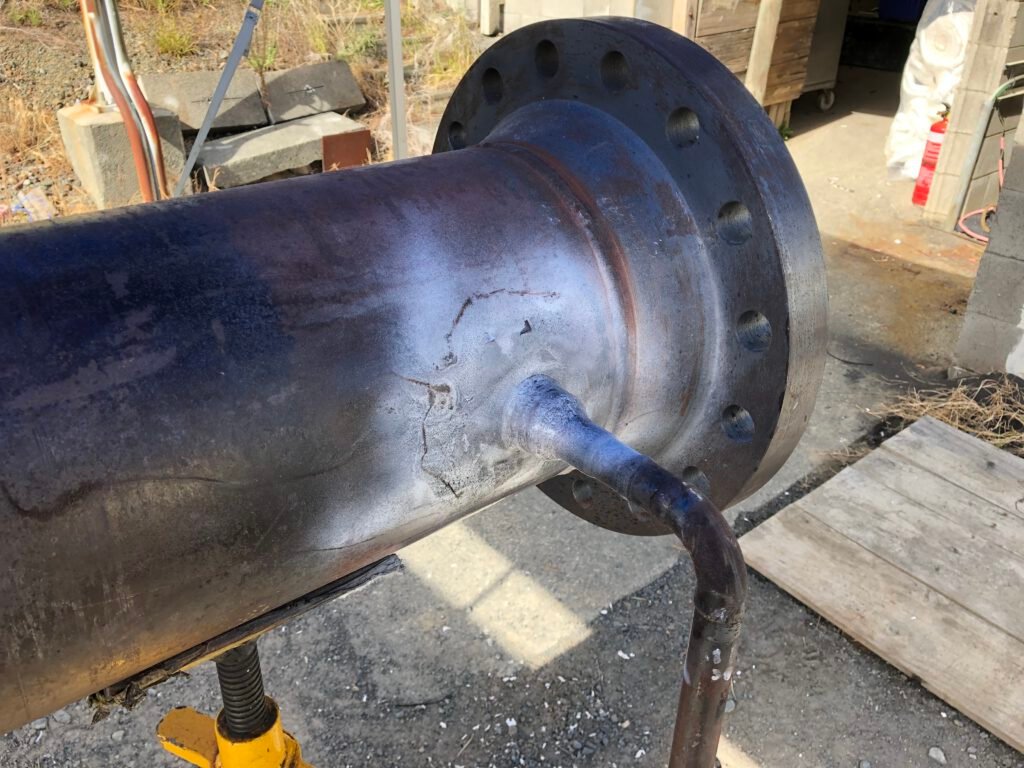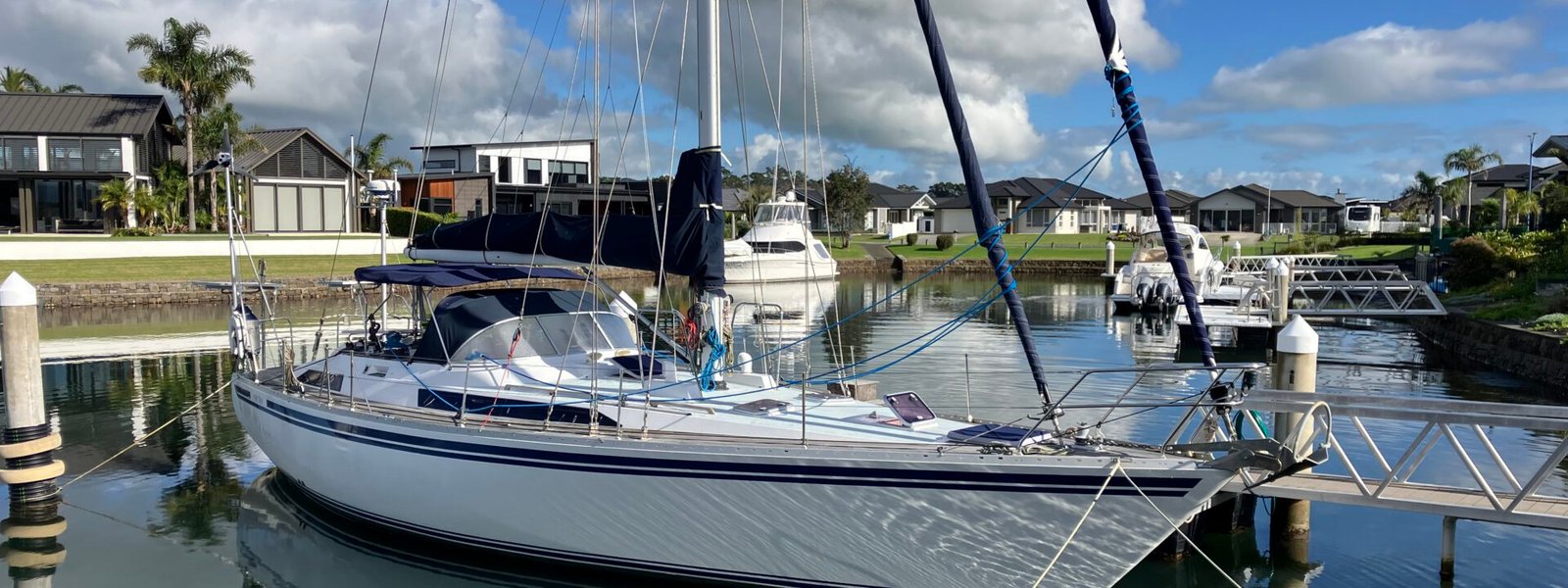
Non-Destructive Testing methods are non-invasive techniques used to determine the integrity of a component or structure of a vessel and to discover flaws without causing any damage.
CTCMS can carry out NDT for pleasure craft; and additionally for commercial vessels – with acceptance by the Commercially Appointed Surveyor.
Ultrasonic Testing (UT)
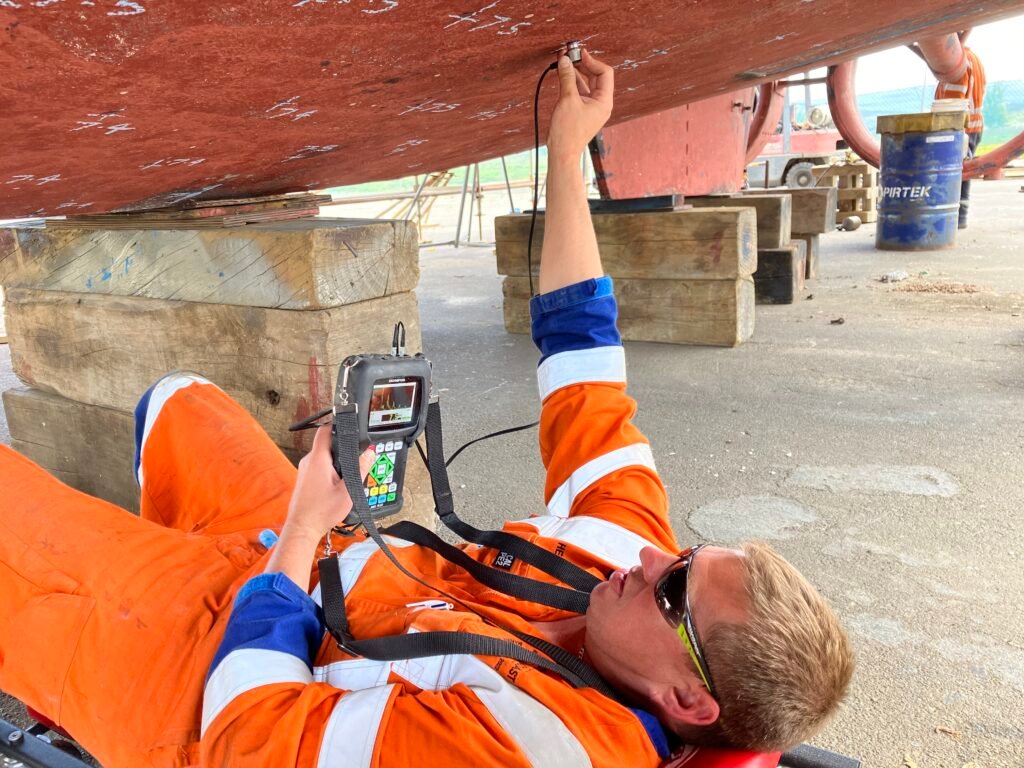
Ultrasonic testing is a non-destructive testing method that uses high-frequency sound waves to detect flaws or measure material thickness, offering a way to examine hulls and structures without damaging the material or without removing internal linings.
Ultrasonic testing is precise and reliable, helping identify areas needing repair before becoming safety risks.
We use the Olympus 38DL Plus Ultrasonic Thickness Gauge for ultrasonic testing.
Note: Test Restrictions may apply.
Dye Penetrant Inspection (DPI)
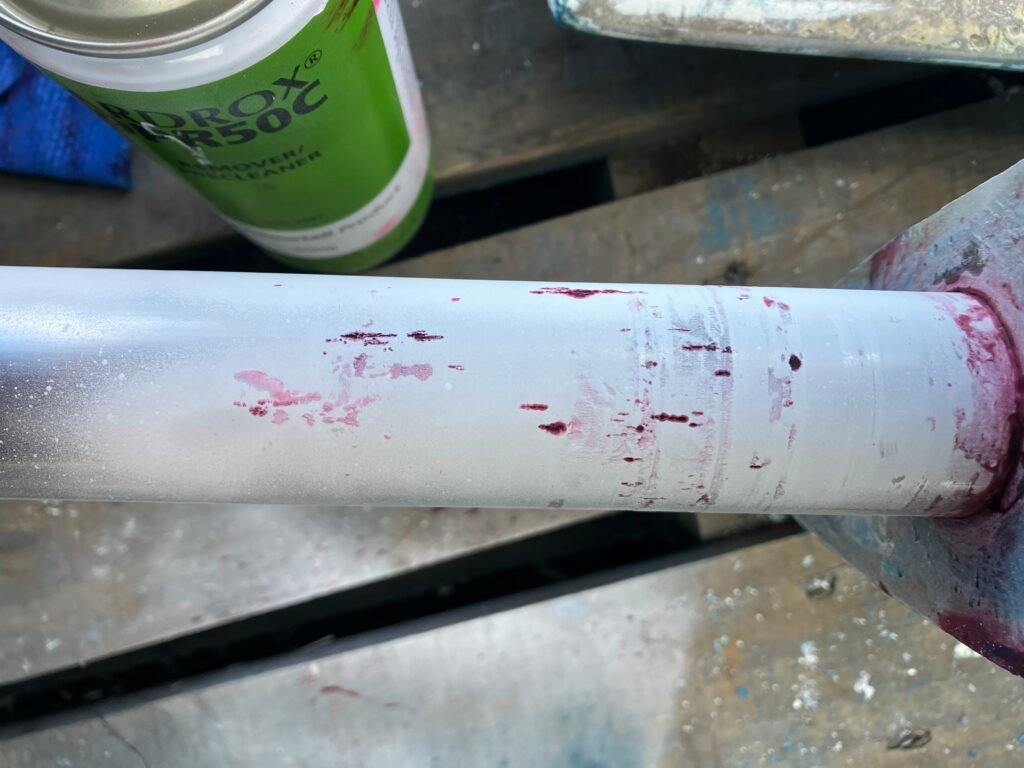
Dye penetrant inspection also known as liquid penetrant inspection is a non-destructive testing method used to detect surface-breaking defects in non-ferrous materials like stainless steel and aluminium by applying a liquid dye penetrant that seeps into cracks followed by the application of a developer to make them visible.
DPI effectively detects small cracks or leaks in critical boat components such as structures, welds, rudder stocks, prop shafts.
Note: Test Restrictions may apply.
Moisture Meter
Moisture meters are valuable tools that can be used to detect excess moisture in timber and GRP (glass reinforced plastic) vessels, aiding in the identification of potential issues such as rot and osmosis (blistering).
While visual inspection and percussion testing are primary methods, moisture meters are useful for assessing specific concerns or when requested by the client.
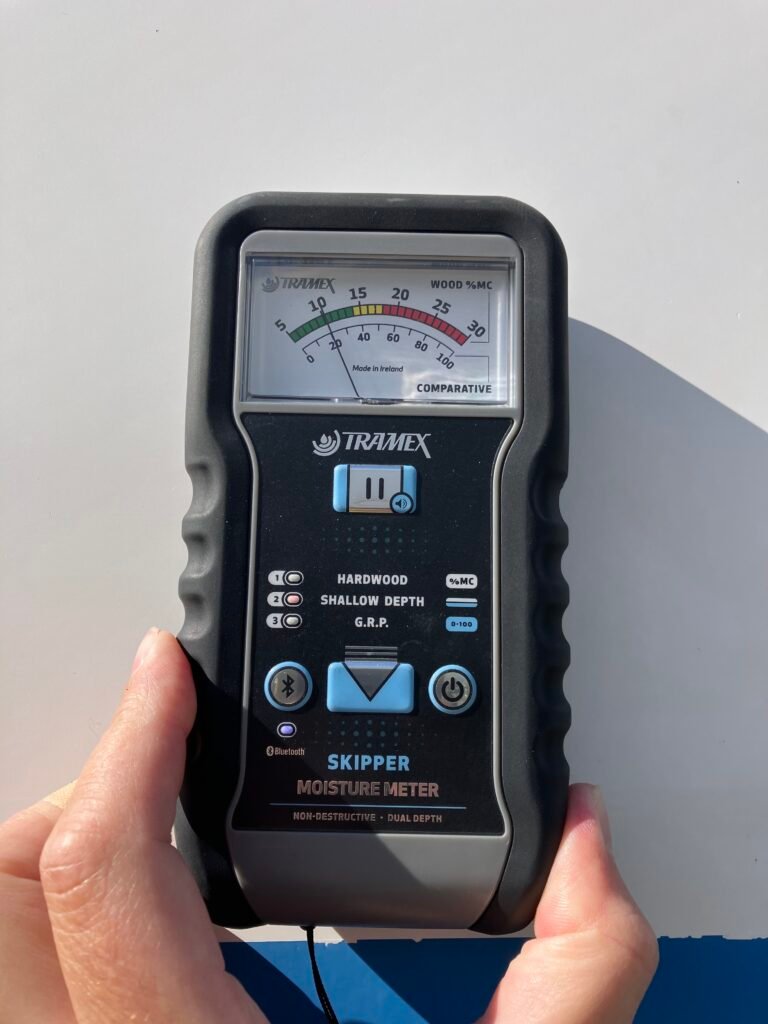
We use the Tramex Skipper 5 – a moisture detection instrument that uses the latest in electronic technology to take non-destructive moisture readings in GRP and wooden boats enabling our Surveyor to check in particular hulls, decks and coach roofs for trapped moisture.
Magnetic Particle Inspection (MPI)
Magnetic particle inspection is a non-destructive method for detecting surface and near-surface defects in ferrous materials, such as steel or iron parts of a vessel.
The material is magnetised and fine magnetic particles are applied to reveal defects like cracks or voids that disrupt the magnetic field. MPI is effective for inspecting critical components like the hull and welds. It quickly identifies areas needing repair and provides an assessment of the structural integrity at the time of inspection.
Note: Test Restrictions may apply.